
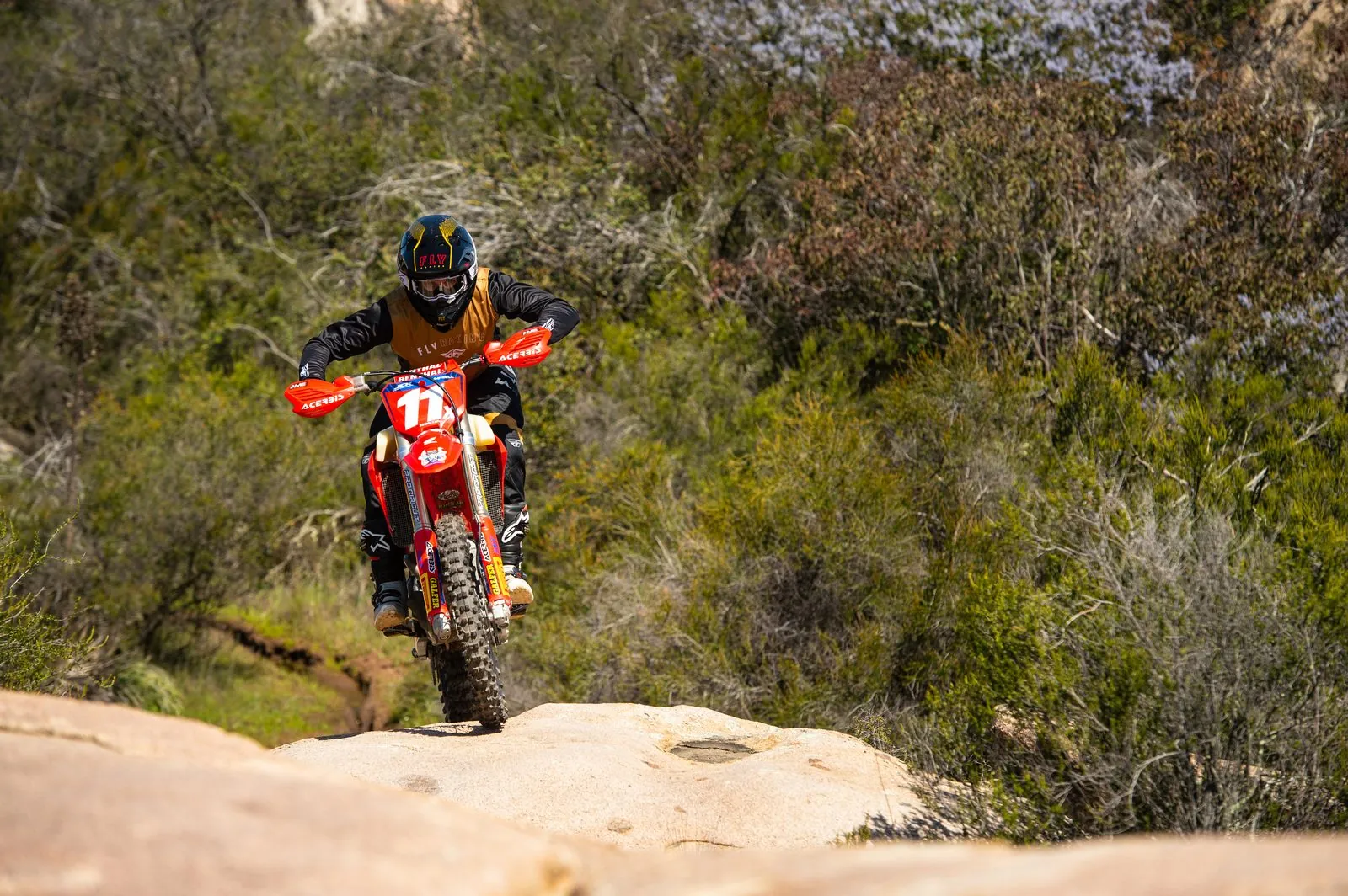
Your front suspension isn't just about comfort - it's central to how your motorcycle steers, brakes, rides, and handles. The front fork supports the wheel, controls dive under braking, absorbs bumps, maintains tire contact, and contributes heavily to handling feel. When the fork system is out of spec - worn seals, wrong oil level, tired springs or dampers - you'll feel it in instability, excessive dive, skipped bumps, sloppy steering, and less confidence. At Fastback Moto, we treat the front forks as a key performance and safety area, not an afterthought.
Fork Suspension Basics: Springs, Oil, Damping & Geometry
Springs
Coil springs inside the fork tubes support the bike's weight and set ride height and sag. Too soft and you bottom out; too stiff and you feel every bump.
Fork Oil
Controls damping - how fast the fork compresses or rebounds - and doubles as a lubricant. Oil volume matters too, since it affects the air-spring effect in many modern cartridge forks.
Damping
Two major modes: compression (the fork moving into its travel) and rebound (the fork extending). Modern cartridge forks let us fine-tune both low- and high-speed damping.
Geometry & Sag
Correct sag, both static and with the rider aboard, keeps the fork working in its mid-travel range where it's designed to perform best.
Fork Seals
Seals keep oil in and contamination out. Worn seals mean lost damping, oil leaks, more friction, and degraded performance - which is why we use premium seals like SKF's, engineered for low friction and durability.
How We Service & Upgrade Front Forks
Step 1: Inspect Fork Condition
Check for oil leaks, seal wear, pitting or corrosion on the stanchions, smoothness of travel, and any bind or unusual noise.
Step 2: Check Sag & Geometry
Measure static and rider sag, compare to manufacturer spec, and adjust preload or spring as needed.
Step 3: Rebuild or Refresh
Replace fork oil, change springs if needed, refresh seals with a premium kit like SKF's, and replace bushings if necessary.
Step 4: Tune Damping & Oil Level
Set baseline compression and rebound for the rider's weight, style, and load, and check oil level and bleed air as needed - oil level changes can noticeably alter feel.
Step 5: Test Ride & Fine-Tune
Verify behavior under braking, cornering, and over bumps, then adjust damping clickers or preload as needed.
We don't just swap out parts and call it good - we dial in the fork so the bike delivers confidence, not just comfort.
Maintenance: Cleaning, Seals & Rebuilds
Cleaning & Visual Checks
Inspect fork tubes for nicks, pitting, or corrosion every so often, since any of that damages seals and stanchion life. Clean stanchions and gaiters periodically.
Seal Replacement
Worn seals cause leaks and reduced damping. A high-quality kit like SKF's cuts friction, improves contamination exclusion, and improves ride feel.
On-Bike vs. Off-Bike Rebuilds
An on-bike rebuild works for minor servicing - oil change, new seals, a basic tune. An off-bike rebuild is for deeper work - full disassembly, new springs or dampers, polished tubes, and all-new internals.
Oil Level and Bleeding
The oil level inside a cartridge fork strongly influences end-stroke behavior - raising it stiffens the later "air spring" effect, lowering it softens it.
Service Intervals
Many riders neglect fork service until performance degrades. We recommend scheduling it based on mileage and usage, especially for off-road or track conditions.
Quality seals, clean tubes, correct oil, and proper tuning keep your forks performing long, consistent, and safe.
Tuning & Adjustment by Riding Style
Dirt / Off-Road / Motocross
Travel is king here - large, repeated impacts demand strong damping, a good spring rate, and robust seals. Oil contamination from mud and water is a real risk, so seals and bushings need to be in top shape, and service intervals run shorter due to harsher cycles.
Adventure / Dual-Sport
Mixed terrain means the forks need to be adaptable. Load variations from a passenger or gear call for adjustable preload and spring rate, and oil level and damping need to balance off-road absorption with road stability.
Sport / Street / Track
Precision and responsiveness dominate - minimal dive, sharp feel, and consistent damping under braking and cornering. We often install performance cartridge kits or high-end rebuilds here, where fork oil cleanliness and tight tolerances matter a lot.
Cruisers / Touring
Comfort, long-haul stability, and load carrying dominate over max performance. Forks still matter - better seals and correct oil improve feel and reduce fatigue, and preload adjustment for passenger or gear load helps, even though maintenance often gets neglected until something feels off.
Why We Choose Quality Components
Cheap Rebuilds Degrade Performance
Poor seals or a cut-rate rebuild increase friction, allow contamination, and degrade damping - all leading to less control and more risk.
A Good Fork Setup Improves Safety
Better wheel contact and a steadier front end under braking and turning mean less fatigue and more control.
It Pays Off for You
Fewer service returns, more ride confidence, and a longer usable life.
Every Other Upgrade Depends on It
A well-set fork makes tires, suspension, and braking upgrades all work better - it's not a part to treat as an afterthought.
Final Word
Your front forks are more than the part of your bike that absorbs bumps - they're integral to how your motorcycle handles, stops, and reacts. At Fastback Moto, we believe front suspension should be cared for, tuned, and upgraded the right way, whether you ride dirt, adventure, sport, or cruiser.
From seal kits to full rebuilds, cleaning, correct oil levels, and dialing in preload and damping, every step matters. If your fork hasn't been serviced, or you're thinking about an upgrade, bring your bike in - we'll walk you through exactly what it needs, tune it for your ride, and get you back out with better feel, better control, and better confidence.